
The most dangerous DeFi transaction is often not the one that fails. It is the one that succeeds exactly as the smart contract was programmed to execute, while the user misunderstands what they approved. A swap can complete while delivering less value than expected; an approval can succeed while granting a contract broad access to tokens; a bridge deposit can be accepted while exposing the user to risks that no wallet interface can eliminate.
That is why transaction simulation has become more important as crypto wallets move from single-chain account management toward multi-chain coordination. A wallet such as Rabby is not merely a place to store addresses. Its useful role is closer to a translation and inspection layer between a person and a collection of autonomous programs spread across Ethereum-compatible networks. The promise is not perfect safety. The practical goal is better information before an irreversible action.
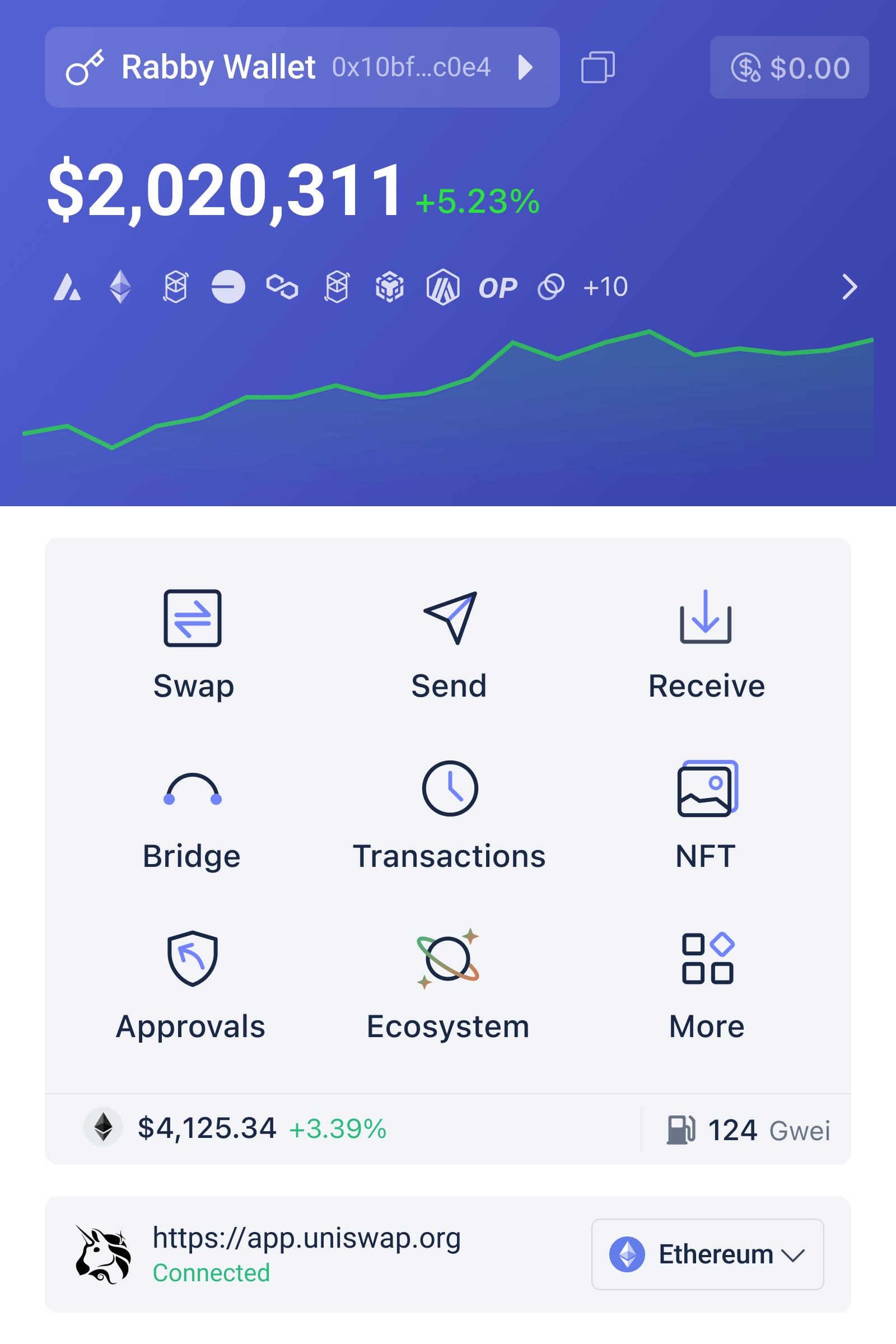
The hidden complexity of a “simple” transaction
In conventional web applications, a button press usually produces an outcome defined by a central server. DeFi works differently. When a user clicks “swap,” “deposit,” or “claim,” the wallet prepares a message for a smart contract. The contract then checks balances, permissions, market conditions, deadlines, and internal rules before changing blockchain state.
That message may contain a contract address, a function selector, encoded parameters, a gas limit, and a fee configuration. Most users do not want to decode those fields manually, and even technically experienced users can miss a dangerous detail when several contracts and tokens are involved. The visible label in a decentralized application is therefore only an interface interpretation of what the wallet is being asked to sign.
Transaction simulation addresses this gap by asking a node to execute the proposed transaction in a read-only environment before the user confirms it. The simulation does not normally publish a transaction or alter the live chain. Instead, it estimates what the call would do using the current state available to the node: which assets might leave the wallet, which assets might arrive, whether a contract call is likely to revert, and whether an approval or permission change is part of the operation.
This is a subtle but important distinction. Simulation is not a guarantee about the future. It is an experiment conducted against a particular snapshot of blockchain state. If the market moves, a pool changes, a transaction is inserted first, an oracle updates, or a contract behaves differently under live conditions, the eventual result may differ from the preview.
How simulation works beneath the wallet interface
At a technical level, many EVM-compatible networks support a form of local execution commonly associated with a read-only contract call. The node processes the transaction as though it were being sent, but discards the resulting state changes. A wallet can inspect the execution trace and compare balances or permissions before and after the hypothetical call.
For example, suppose a user wants to exchange one token for another through a decentralized exchange. The simulation can reveal an estimated token output, a fee or price impact, and whether the call would revert because of an expired deadline, insufficient allowance, or a changed pool condition. For a lending transaction, it may show collateral movement, debt creation, or a health-factor consequence. For an NFT interaction, it may expose that the user is transferring an asset rather than merely listing it.
The most useful mental model is not “the wallet knows what will happen.” It is “the wallet runs a controlled rehearsal of what the node currently believes will happen.” That rehearsal can catch mismatches between the user’s intention and the contract’s likely effect. It cannot turn an adversarial or uncertain environment into a deterministic one.
Multi-chain use makes this more difficult. Networks may share the Ethereum Virtual Machine but differ in chain identifiers, native fee assets, RPC reliability, block times, liquidity, contract deployments, and security assumptions. The same token symbol can refer to different contracts on different chains. A familiar decentralized application may also use distinct routers, bridges, or lending markets depending on the selected network.
A multi-chain wallet therefore has to answer two questions before it can offer a useful preview: “What is this transaction asking the contract to do?” and “On which chain, against which contracts and state, will it happen?” Confusing those questions is one reason a user can feel safe while interacting with the wrong network or an imitation contract.
What Rabby-style transaction warnings can and cannot solve
For DeFi users considering a browser wallet, the value of transaction analysis is practical rather than magical. A clear preview can make contract interactions less opaque by presenting likely asset changes, approvals, warnings, and failure conditions before a signature is authorized. That is especially useful when moving between networks, where the interface may not make chain-specific differences obvious.
Users who want to evaluate the extension should begin with the rabby extension download process and verify that the installation source is the intended one. Installation itself is part of the security boundary: a counterfeit extension can imitate familiar branding while capturing seed phrases, passwords, or transaction approvals. No simulation feature can compensate for software obtained from an untrusted source.
Once installed, the safest workflow is to treat the wallet preview as a question generator. Ask what asset is leaving, what asset is arriving, which contract is receiving permission, whether the amount is bounded, and whether the action creates a continuing authorization. If the answer is unclear, pause rather than assuming the warning is merely technical noise.
One especially important distinction is between a token transfer and a token approval. An approval may not move tokens immediately. Instead, it can allow a specified spender to move tokens later, sometimes up to a very large amount. A simulation that highlights this permission change is valuable because it surfaces the economic consequence of a message that may otherwise look like a routine setup step.
Another useful distinction is between a transaction that fails safely and one that succeeds dangerously. A reverted transaction can waste network fees, but a successful transaction can authorize an unwanted transfer or lock funds in an unexpected contract. Wallets should help users understand both outcomes. “The call will not revert” is not equivalent to “the call is good for you.”
Where the preview breaks down
The first boundary condition is state freshness. DeFi markets are dynamic. A simulated swap may use reserves that change before the transaction is mined. Slippage limits reduce some price risk, but they do not eliminate execution uncertainty. The larger the trade relative to available liquidity, the more important this gap becomes.
The second limitation is transaction ordering. A public transaction may sit in a mempool before inclusion, where other participants can observe and react to it. Front-running, back-running, and sandwich strategies are not necessarily visible in a private simulation performed before broadcast. A preview can show the expected result under current assumptions, while the live ordering environment produces a worse price.
Third, simulation depends on the node and its data. RPC providers can be delayed, misconfigured, unavailable, or inconsistent with another provider. A wallet may also have incomplete visibility into unusual contract behavior, proxy upgrades, external calls, or logic that depends on information unavailable during the rehearsal. These are not reasons to reject simulation; they are reasons to treat it as evidence with a confidence boundary.
Fourth, a simulation cannot reliably judge intent. A malicious contract may execute exactly as designed while presenting an attractive interface. It may request a signature that looks routine but grants a dangerous permission, or it may direct the user to sign a message rather than a conventional transaction. Simulation is strongest at describing probable effects, not at determining whether a project, developer, domain, or investment thesis deserves trust.
Cross-chain actions add another layer of uncertainty. A bridge transaction can be simulated on the origin chain, but the later destination-chain result depends on relayers, validators, message delivery, liquidity, and the bridge’s own design. The first transaction may appear successful while the full user objective remains incomplete. In other words, a cross-chain workflow is often a sequence of state transitions, not one atomic action.
A practical framework for signing in DeFi
A useful signing discipline has four stages. First, identify the chain and the intended application. Second, inspect the proposed state changes, especially token outflows and approvals. Third, compare the preview with the user’s actual goal: if the goal is to swap, why is a different asset leaving; if the goal is to claim, why is a broad allowance requested; if the goal is to bridge, what exactly is locked and what is expected on the destination network?
Fourth, consider what the preview does not cover. Check whether the transaction depends on a volatile market, public mempool ordering, a third-party bridge, an unfamiliar contract, or an unlimited permission. For a high-value transaction, a small test amount can be more informative than confidence based on a polished interface. Keeping separate wallets for experimentation, long-term holdings, and routine activity can also limit the damage from a compromised application.
This framework corrects a common misconception: wallet security is not a single yes-or-no property. It is a chain of decisions involving software authenticity, key protection, contract permissions, network selection, transaction interpretation, and post-signing monitoring. Transaction simulation improves one link in that chain. It does not replace the others.
What to watch as wallets become more analytical
The next stage of wallet design will likely depend less on adding another network logo and more on improving the quality of interpretation. Conditional warnings, clearer permission management, better explanations of cross-chain dependencies, and stronger separation between simulation confidence and contract reputation would all be meaningful advances. These features would help users understand not only what a transaction may do, but also which assumptions make that conclusion fragile.
The hard problem is that better warnings can create warning fatigue. If every interaction produces a long list of technical cautions, users may approve messages mechanically. A useful wallet must prioritize material risks: unexpected asset movement, unusually broad permissions, network mismatch, unusual contract behavior, and consequences that are difficult to reverse. More information is not automatically more safety; the information must be timely and interpretable.
For US users, that practical discipline matters across a market where platforms, tokens, and applications can differ sharply in governance, custody, and regulatory treatment. A wallet cannot resolve those questions for the user, and a simulation is not investment advice or a legal determination. Its narrower contribution is still significant: it can make the proposed blockchain action more legible before the private key authorizes it.
Frequently Asked Questions
Does transaction simulation guarantee that my DeFi transaction is safe?
No. It estimates execution using available blockchain state and can reveal likely transfers, approvals, and reverts. It cannot guarantee future prices, transaction ordering, bridge completion, contract honesty, or the safety of an unfamiliar application. Use the preview as one security control within a broader process.
Why is simulation especially useful in a multi-chain wallet?
Because the same token symbol, application, or transaction label can represent different contracts and risks on different networks. A multi-chain wallet must account for chain selection, fee assets, contract deployments, and state. Simulation helps connect the technical request to the likely result on the selected chain, although it cannot remove cross-chain uncertainty.
What should I do if the wallet preview differs from my intention?
Do not sign immediately. Check the selected network, the application domain, the contract address, the requested approval, and the assets shown in the preview. If the mismatch remains unexplained, reject the transaction and investigate through a trusted source. Confusion is itself a useful warning signal.
The strongest multi-chain wallet is not the one that makes every transaction feel effortless. It is the one that makes important uncertainty visible at the moment it matters. Simulation is best understood as a rehearsal: informative, technically grounded, and inherently limited. Used with careful permission management and deliberate network checks, it gives DeFi users a sharper basis for deciding what deserves a signature.